
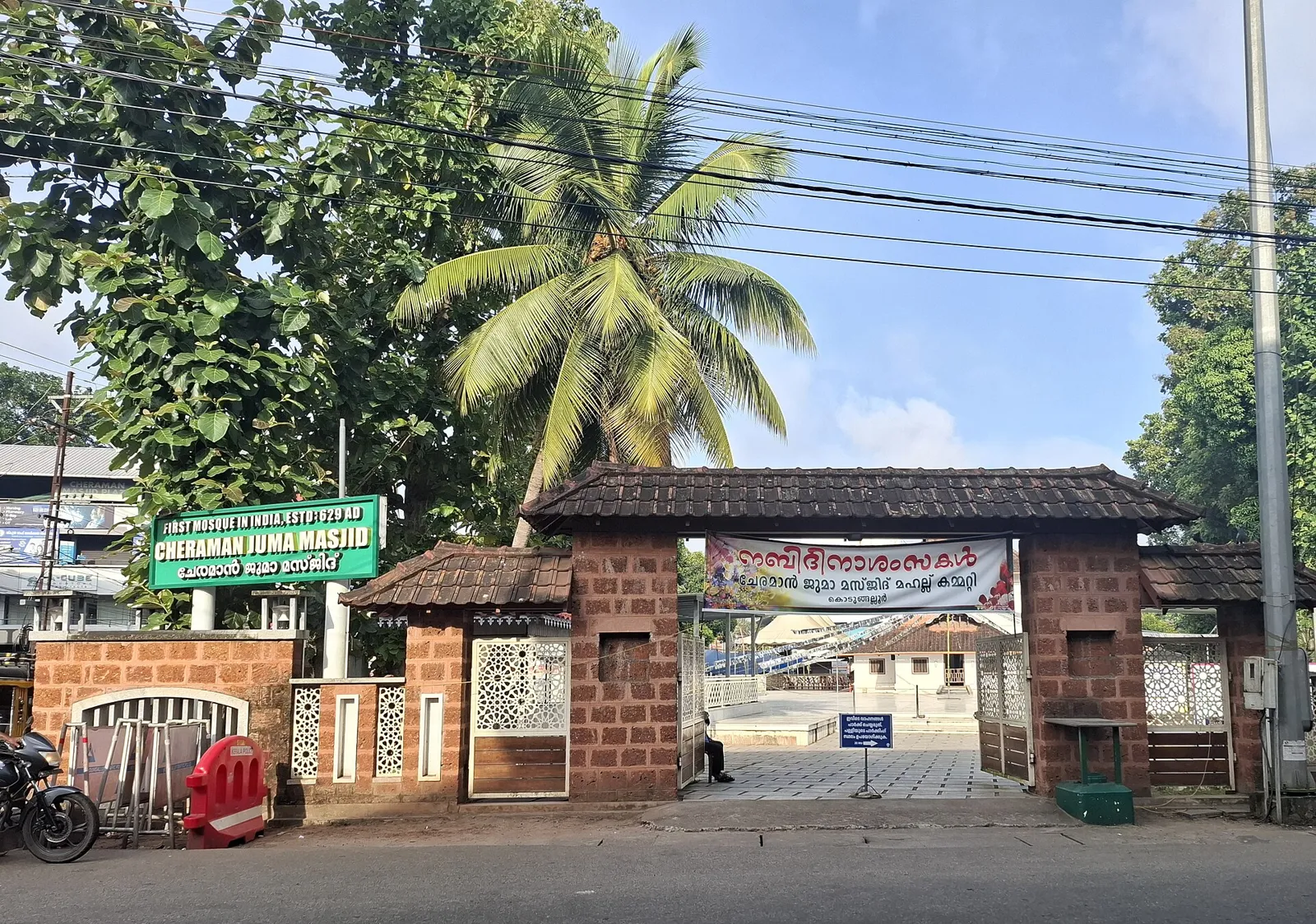
Cheraman Juma Masjid
Kerala-style mosque that tradition dates to 629 CE.
Photo: Pinakpani, CC BY 4.0
At Methala, Kodungallur. Tradition credits Malik Bin Dinar with founding it in 629 CE, which would make it one of the oldest mosques in the subcontinent - historians treat this date as legend, not proven. The building looks like an old Kerala temple, with a tiled roof and wooden interiors, recently restored. A small museum is attached.
Heads up: Access to the main prayer hall for women and non-Muslims depends on the mosque committee - ask at the office. The museum and exterior are open to visitors.
How to get there
Best time to go
- JJanuary Best
- FFebruary Best
- MMarch Best
- AApril Best
- MMay Best
- JJune Possible
- JJuly Possible
- AAugust Possible
- SSeptember Possible
- OOctober Best
- NNovember Best
- DDecember Best
Open all year. Nov-Mar is cooler.
Timings: About 5:15 am to 7:30 pm. Avoid prayer times, especially Friday noon.
Permit & booking
No permit needed · No booking needed
Walk in. Follow the rules at the gate.
Fee: Free.
How to prepare
Tick things off as you pack - your phone remembers.
Stay nearby
Rooms near Irinjalakuda, about 20 km for an early start.
Nearby places

Quick answers
When is the best time to visit Cheraman Juma Masjid?
Best months: January, February, March, April, May, October, November, December. Open all year. Nov-Mar is cooler.
How do I reach Cheraman Juma Masjid?
Location: Methala, on the Kodungallur-Paravur road. Rail: Irinjalakuda, about 20 km. Air: Cochin International Airport, about 35 km. Last mile: Bus to Kodungallur, then auto.
Do I need a permit or booking?
No permit needed. No booking needed. Walk in. Follow the rules at the gate.
What are the timings and entry fee?
About 5:15 am to 7:30 pm. Avoid prayer times, especially Friday noon. Free.
Can people of other faiths visit?
Yes, visitors are welcome outside service or prayer times. Access to the main prayer hall for women and non-Muslims depends on the mosque committee - ask at the office. The museum and exterior are open to visitors. Cover arms and legs; women carry a scarf